How Much Water Can Sodium Polyacrylate Absorb

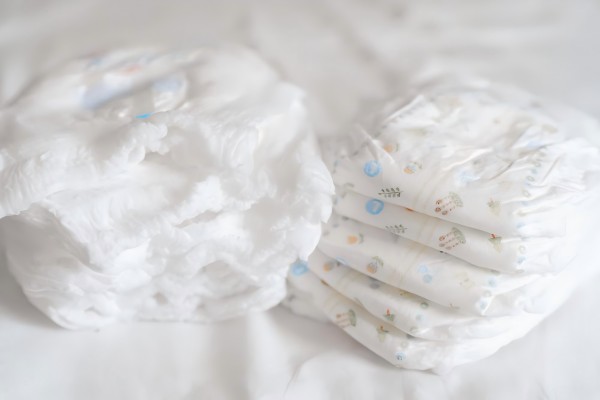
Sodium polyacrylate, a superabsorbent polymer (SAP), has revolutionized various industries with its remarkable ability to absorb and retain large quantities of water relative to its mass. This article delves into the scientific principles behind sodium polyacrylate's water absorption capabilities, the factors influencing its water absorption rate and efficiency, and its liquid permeability properties. Understanding these aspects can provide valuable insights into optimizing its use in various applications, from diapers to industrial wastewater treatment.
Principle of Sodium Polyacrylate Water Absorption
Sodium polyacrylate is a polymer consisting of long chains of repeating units, each containing sodium ions. The key to its water absorption lies in its chemical structure. When water comes into contact with sodium polyacrylate, the sodium ions dissociate from the polymer chains, leaving behind negatively charged carboxylate groups. These carboxylate groups attract and hold water molecules through hydrogen bonding and ionic interactions.
The polymer network swells as it absorbs water, forming a gel-like substance. This swelling is a physical change driven by the osmotic pressure difference between the polymer network and the surrounding water. The cross-linked structure of sodium polyacrylate prevents it from dissolving in water, allowing it to retain absorbed water and maintain its integrity even when fully saturated.
Water Absorption Rate of Sodium Polyacrylate
How to Test Water Absorption Rate
The water absorption rate of sodium polyacrylate can be measured using a gravimetric method. This involves:
- Weighing a dry sample of sodium polyacrylate.
- Immersing the sample in water for a specified period, typically 30 minutes to 1 hour.
- Removing the sample, allowing excess water to drain, and reweighing it.
The water absorption rate is calculated using the formula:

Factors Affecting Water Absorption Rate
Several factors influence the water absorption rate of sodium polyacrylate:
- Cross-linking Density: Higher cross-linking density results in a more rigid polymer network, reducing its ability to swell and absorb water.
- Particle Size: Smaller particles have a larger surface area-to-volume ratio, leading to faster water absorption.
- Ionic Strength of Water: Presence of salts in water can reduce the water absorption capacity due to the shielding effect on the carboxylate groups.
- pH Levels: Extreme pH levels can affect the ionization of carboxylate groups, altering the water absorption rate.
Absorption Efficiency
How to Test Absorption Efficiency
Absorption efficiency is evaluated by determining the percentage of water retained by the polymer after a specified period under certain conditions. This can be tested by:
- Swelling the sodium polyacrylate sample in water.
- Applying an external pressure to simulate real-world conditions, such as in diapers or agricultural applications.
- Measuring the amount of water retained by the polymer after the pressure is applied.
The absorption efficiency is calculated using the formula:

Factors Affecting Absorption Efficiency
- External Pressure: Higher pressure can force water out of the polymer network, reducing absorption efficiency.
- Cross-linking Density: Similar to the water absorption rate, higher cross-linking density can reduce the polymer's ability to retain water under pressure.
- Environmental Conditions: Temperature and humidity can affect the polymer's physical state and its water retention capabilities.
- Duration of Absorption: Over time, the polymer network may relax, leading to a slight decrease in water retention.
Liquid Permeability
How to Test Liquid Permeability
Liquid permeability refers to the polymer's ability to allow water to pass through its network. This can be tested using a permeability cell:
- Placing a saturated sample of sodium polyacrylate in the cell.
- Applying a constant pressure to the sample.
- Measuring the flow rate of water passing through the sample over a specified period.
The liquid permeability is calculated using the formula:

Factors Affecting Liquid Permeability
- Cross-linking Density: Higher cross-linking density reduces the pore size within the polymer network, decreasing permeability.
- Particle Size and Distribution: Uniform particle size distribution ensures consistent pore sizes, enhancing permeability.
- Water Quality: Presence of impurities or salts can clog the polymer network, reducing permeability.
- Swelling Degree: Highly swollen polymers have smaller pore sizes, reducing liquid flow through the network.
How to Improve Liquid Permeability
- Optimizing Cross-linking Density: Balancing cross-linking to achieve sufficient strength without excessively restricting pore sizes can enhance permeability.
- Controlling Particle Size: Producing polymers with uniform particle size distribution can improve consistency in permeability.
- Pre-treatment of Water: Removing impurities and adjusting ionic strength of water can prevent clogging and maintain high permeability.
- Mechanical Agitation: Periodic mechanical agitation can prevent clogging and maintain the polymer network's permeability.
Conclusion
Sodium polyacrylate's ability to absorb and retain water makes it invaluable in various applications, from hygiene products to agriculture and industrial wastewater treatment. Understanding the principles behind its water absorption, the factors influencing its absorption rate and efficiency, and its liquid permeability can help optimize its use for specific needs. By tailoring the polymer's properties through adjustments in cross-linking density, particle size, and environmental conditions, sodium polyacrylate can be engineered to meet the demands of diverse applications, ensuring maximum efficiency and performance.
Super absorbent polymer
What is Super Absorbent Polymer?