How Sodium Polyacrylate Enables Gentle and Long-Lasting Cooling?

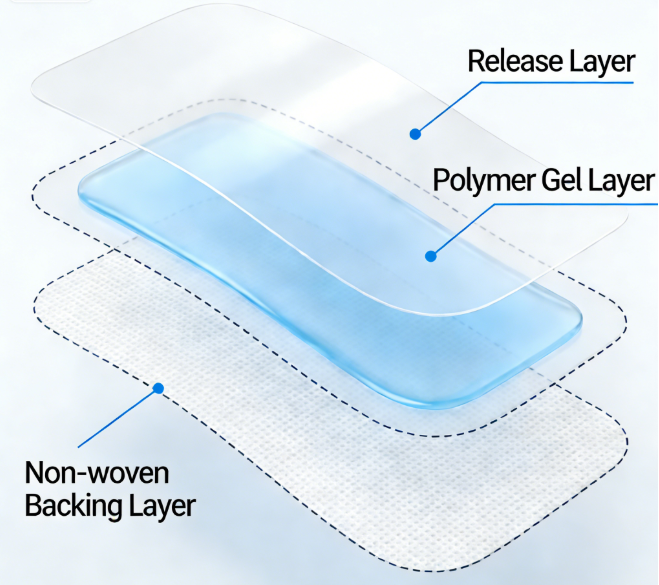
When family members have a fever, cooling patches are an essential emergency item for every household. No medication is needed—just stick one on the forehead for quick cooling, making them especially suitable for babies who resist taking medicine and adults needing gentle fever reduction. But did you know? The key to cooling patches’ ability to provide stable cooling for 8-12 hours with comfortable, non-irritating application lies in a magical polymer material: sodium polyacrylate.
Today, we’ll break down the "hidden skills" of sodium polyacrylate in cooling patches, explaining why it’s the "core backbone" and what key points to consider when choosing one.
I. Sodium Polyacrylate: The Key Raw Material of Cooling Patches
The cooling principle of patches is simple—heat is dissipated through water evaporation. However, achieving "sustained, gentle, and non-dripping" results requires more than ordinary materials. Sodium polyacrylate stands out as the top choice for three core capabilities:

1. Super Strong Water Storage: A Built-in "Mobile Reservoir"
As a polymer, sodium polyacrylate has a three-dimensional "water-absorbing network" molecular structure, capable of absorbing 500-1000 times its own weight in water! This means a small gel layer in a cooling patch can store a large amount of water, providing ample "fuel" for continuous evaporative cooling.

Compared to traditional ice packs: Ice packs cool via conduction, with excessively low temperatures that may cause skin frostbite and short duration. In contrast, water stored in sodium polyacrylate evaporates slowly, offering gentle cooling (1-2℃ temperature drop)—perfect for the human body’s comfortable fever reduction needs, safe for both adults and babies aged 0-3. (Please follow product instructions and medical advice for specific use.)
2. Precise Evaporation Control: 8 Hours of Uninterrupted Cooling
If water evaporates too quickly, the patch dries out and fails rapidly; if too slow, the cooling effect is negligible. Sodium polyacrylate’s "water-absorbing network" solves this perfectly—its dense structure "locks in" water, enabling uniform evaporation and stable cooling for 8-12 hours.
In practical use, skin temperature drops by 1-1.5℃ within 5 minutes of application. Even after 8 hours, effective cooling is maintained, eliminating the hassle of frequent replacements.
3. Comfortable Gel Forming: Non-dripping and Residue-free
A good cooling patch must "stick firmly and peel off easily"—another advantage of sodium polyacrylate:
- Adding 1.0%-2.0% sodium polyacrylate turns liquid raw materials into elastic, tough gel, preventing dripping and staining clothes during use.
- When in contact with skin, the gel swells with water to form mild adhesion, fitting tightly to the forehead, back of the neck, and other areas without falling off during activity or forming air bubbles that hinder cooling.
- Removal is hassle-free: the gel doesn’t leave residue on the skin and peels off cleanly with a gentle pull, avoiding skin irritation.
II. Beyond Cooling: Sodium Polyacrylate Enhances Safety
In addition to core cooling functions, sodium polyacrylate subtly improves the safety of cooling patches—especially crucial for infants and young children:
1. Protecting Cooling Ingredients from Irritation
Many cooling patches contain refreshing ingredients like menthol and eucalyptus oil to enhance the cooling sensation. However, rapid volatilization of these ingredients can irritate the skin (e.g., redness or stinging on babies’ skin).
Sodium polyacrylate’s molecular chains "wrap around" these oil-soluble ingredients, slowing their volatilization. This ensures a refreshing feeling for 8-10 hours while preventing skin discomfort caused by rapid ingredient release.
2. Stabilizing pH for Sensitive Skin
The skin’s comfortable pH range is 5.5-7.0. The carboxyl groups in sodium polyacrylate act as a buffer, maintaining the gel’s pH within this safe range and reducing irritation from preservatives and other components.
Skin patch tests confirm that cooling patches with sodium polyacrylate have an irritation pass rate of over 99%, safe for sensitive skin and infants. (Note: For infants, choose products with menthol concentration ≤0.2% and acrylic acid residue ≤0.05%.)
What is cooling patch?
kDa Definition of Dalton