Cooling Patch Solution

I. Features and Examples
- Strong adhesion, firmly attaches to joints, no additional fixation tape required
- High water content, better cold compress analgesia effect
- Compatible with existing equipment
- Can be cured inside the bag
II. Technical Principles
Principle:
Sodium polyacrylate cross-links under the action of aluminum ions to form a three-dimensional water-retaining adhesive layer.
This layer is then coated onto a non-woven fabric and release film using specialized coating equipment, and cured to form an elastic hydrogel layer.
Upon contact with the skin, this gel layer softens the stratum corneum and continuously propels the active ingredients into the body.
Specifications:
-
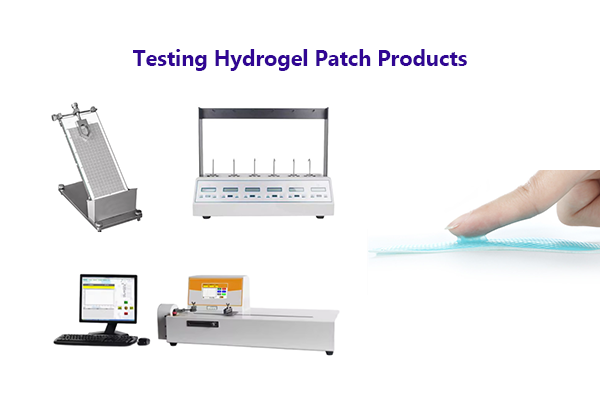
Adhesion: Initial tack > 14# steel ball (rolling ball ramp stop method)
- Peel strength: ≤ 0.98N
III. Required Equipment

IV. Materials and Formula

Note: The amount of EDTA-2NA used can be fine-tuned based on the ambient temperature and coating time per batch. While ensuring smooth coating, the amount of EDTA-2NA can be appropriately reduced. Lower temperatures result in slower product curing; higher EDTA-2NA usage alsao leads to slower curing.
Instructions:
- First, add glycerin to the mixer, then add the remaining powder components from Part 1. Start mixing (medium speed) for 3-4 minutes, until a smooth, semi-fluid paste is formed, with no visible powder particles. Add Part 3 before the mixing is finished and mix well.
- In a measuring cup, add alcohol and mint to Part 3, stir well, and set aside (the alcohol will completely dissolve the mint).
- In another container, prepare Part 2 by adding deionized water, then preservative, pigment, and tartaric acid. Mix thoroughly and pour into a vacuum mixer.
- Add the mixed Part 1.
- Vacuum the mixer until the pressure gauge reads below 0.08 Pa, then start rapid mixing for 4-7 minutes until a viscous colloid is formed.
- Stop mixing, release the vacuum, and discharge the mixture into the hopper of a dedicated coating machine.
- Discharge the mixture from the hopper, start the coating and slitting machine, and set the machine coating speed and conveyor belt speed according to production requirements.
- Package after curing for 6-10 hours.
V. Process and Parameters
Brief description of the process flow:

Process parameters:
1) The glycerol phase (Part 1) must be thoroughly mixed and free of visible lumps;
2) The time from mixing the aqueous phase and the glycerol phase (i.e., step 6) to discharge the material into the hopper should not be too long, not exceeding half an hour;
3) The coating time for each batch of material should be controlled within 20 minutes; excessive time may lead to difficulties in coating the tail material.
General Tools and Equipment for Testing Hydrogel Patch Products